Special feature
Tastes Like Chicken
1,700 years of price tags, from a Roman price cap to the supermarket shelf.
In the early 1200s, the geographer Yāqūt al-Ḥamawī visited Wāsiṭ, in what is now Iraq, and saw twelve chickens selling for one dirham. Even he thought that was unusually cheap. And if you were willing to take younger birds, the same coin bought twice as many.
So much for the idea that cheap chicken is a modern invention. Follow the price tags from ancient Rome to the supermarket and you’ll find bargains, limits on what sellers could charge, and a surprising amount of arithmetic for a bird most of us buy without a second thought.
- Roman Empire · 301 CE
- Wāsiṭ · early 1200s
- Hong Kong · 1867
- Ten U.S. cities · 1961
- Malaysia & U.S. · 2026
Roman Empire301 CE
Rome puts a ceiling on dinner
Legal maximum
60 denarii for two chickens
Legal maximum · imperial price edict
Emperor Diocletian’s government tried to rein in rising prices by setting a maximum for everything from meat to a day’s work. The limit for two chickens was 60 denarii. Two ducks were capped at 40. On the official list, the ducks were the cheaper dinner.
That same edict set a farm laborer’s maximum cash wage at 25 denarii a day, with food and upkeep in addition. Set both figures at their legal limits and the chickens would take nearly two and a half days’ cash pay. That’s the emperor’s arithmetic. We don’t have the market shopper’s receipt.
Wāsiṭ, IraqEarly 1200s
A dozen birds for one coin
1 dirham for 12 chickens
Price reported by a visitor
Yāqūt had been to Wāsiṭ more than once. His description is full of gardens, date palms, and food so inexpensive he could hardly do the place justice. He listed bread, milk, fish, and two prices for poultry. One dirham bought twelve chickens, or twenty-four young birds.
He put the number in his book because it stood out. It tells us that a city could offer startlingly cheap chicken centuries before industrial farming. It also tells us that medieval travelers liked coming home with a good bargain story.
Hong KongReported in 1867
Chicken goes on the scale
Published market price range

An English-language guide to the treaty ports listed chicken by the catty, a weight of about 600 grams. “Cash” was the name of the coin unit. The guide also priced hen’s eggs at 100–120 cash a dozen.
So the money for a catty of chicken would buy roughly 18 to 24 eggs. It’s the kind of comparison a market shopper could make without wondering what a nineteenth-century coin would be worth today.
Ten U.S. cities1961
The fryer goes on special
Two averages from the same USDA study
By 1960, U.S. frying chicken prices were already more than a quarter below where they’d been in 1950. Breeding birds for meat and raising and processing them on a larger scale helped bring the price down. Grocers had a deal they could put in the paper, week after week.
That’s what changed. Wāsiṭ could have an exceptionally cheap market. American grocers could make cheap chicken a regular feature of the weekly shop. And if you’d bought a three-pound fryer at that average newspaper special, you’d have paid 81 cents.
Malaysia & U.S. citiesMay & October 2026
Which chicken are you buying?
Malaysia · May 2026
RM10.48 per kilogram
Standard chicken
National average for standard chicken
U.S. cities · October 2026
$2.03 per pound
Fresh whole chicken
$4.10 per pound
Boneless chicken breast
Retail averages
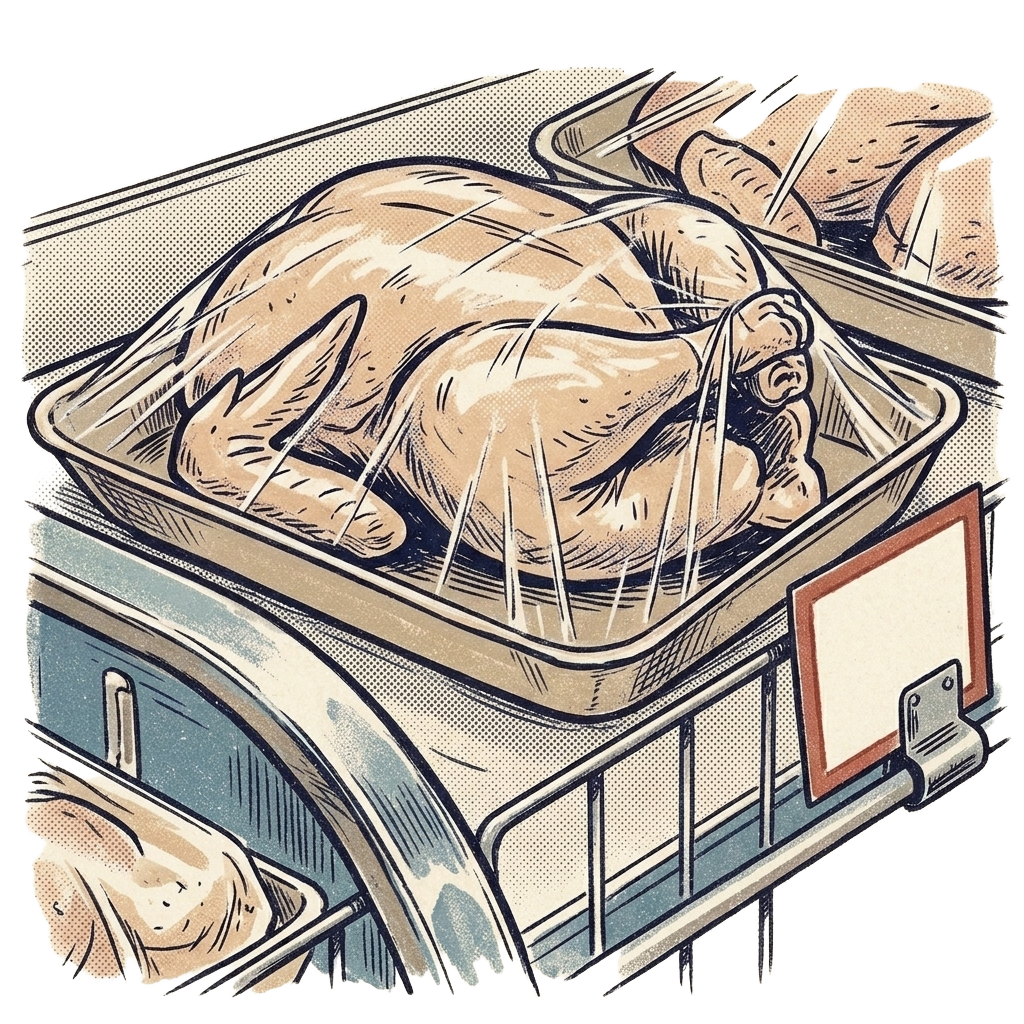
The Malaysian and American surveys put different units on the shelf. The sharpest comparison is right there in the American numbers. By weight, a pound of boneless breast cost about twice as much as a pound of whole chicken. You get different things for your money. With the whole bird you’re buying bones as well as meat. With the breast, someone has already done the knife work.
We started with an emperor pricing chickens by the pair. Now the grocery aisle can put two prices on the same bird. Before you decide whether chicken is cheap, it helps to ask which chicken you’re buying.
Where the prices came from
- Roman Empire. Diocletian’s Edict on Maximum Prices, 301 CE, sections IV.23 (chickens), IV.31 (ducks), and VII.1a (farm labor).
- Wāsiṭ. Yāqūt al-Ḥamawī, Muʿjam al-buldān, entry for Wāsiṭ, early thirteenth century. See also Social Life Under the Abbasids for the twelve-chicken figure in English.
- Hong Kong. The Treaty Ports of China and Japan, 1867, p. 26, poultry table. The Hong Kong catty is about 605 grams.
- U.S., mid-century. Bureau of Labor Statistics, Retail Prices of Food, 1959–60, and USDA, Retail Price Specials for Frying Chickens in Selected U.S. Cities, 1960–61, Table 1. See also the USDA history of the U.S. broiler industry.
- 2026. Department of Statistics Malaysia, May 2026 consumer price release, and U.S. Bureau of Labor Statistics, October 2026 average retail food prices.